segunda-feira, 18 de setembro de 2023

Day 5 - Determining your end learning for the unit

 Determining your end learning for the unit


Reality: Assessments and Grading is what both students and teachers are measured against;

Change to a positive: Meaningful learning can be driven with meaningful learning products and assessments;


Measures changes to the way the learner thinks, feels and acts.The lesson benefited me because, prior to this I would only prepare of think of an assessment after I started the topic or had a diagnostic assessment on the topic to guide me on the making of the assessment tools that would make more sense.

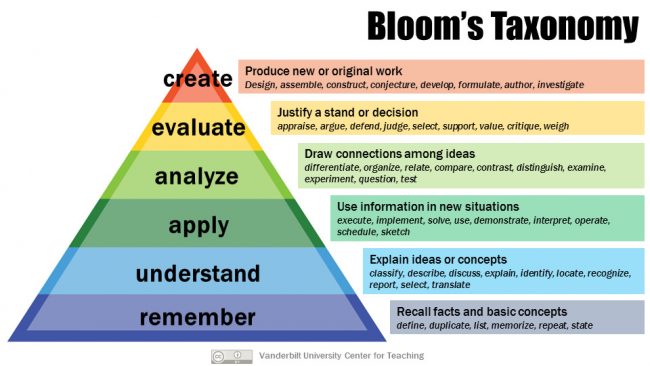
After discussions and reading the chapter, I realized that it makes sense that I aim for the assessment since the beginning and it is aligned with the learning goals and enduring understanding. This is just the evidence that students can perform what was defined on the UE.

Criteria for unit assessment

Gathers evidence from multiple means of expression;

Learning products should be the focal point throughout the unit;

Meaningful representation of the activities within the unit;

Ideally an “authentic learning product”.

quarta-feira, 13 de setembro de 2023

Days 5 and 6- Unit and Lesson Plan Analysis

 Unit and Lesson Plan Analysis


I am observing the big unit and how to write an effective enduring understanding that aligns with the UDL principles.

What is provided in the Unit plan: 

Students will learn to identify letters, names and sounds. 

What I came up with using Chat GPT: 

In this Grade 1 lesson on letter names and their sounds, students will discover the fundamental connection between letters, their names, and the sounds they make, recognizing that learning is enriched through diverse sensory experiences and individualized strategies. They'll understand how mastering letter names and sounds is integral to phonemic awareness and gradually builds a toolbox for reading, bolstering confidence in real-world communication. In this inclusive and supportive learning environment, students will respect each other's unique styles of learning, appreciating the flexibility and ownership they have in their learning journey.

These enduring understandings emphasize the importance of flexibility, accessibility, and individualization in teaching letter names and sounds to Grade 1 students, aligning with UDL principles to meet the diverse needs of all learners.


Day 5 - Revised EU combining our definition of learning

In this Grade 1 lesson on letter names and their sounds, students will grasp the enduring understanding that learning involves a continuous process, where letters, their names, and sounds are interconnected. Through diverse sensory experiences and tailored strategies, they'll change their thinking, feeling, and actions. Mastering letter names and sounds enhances phonemic awareness and reading skills, boosting confidence for real-world communication. In an inclusive, supportive environment, students appreciate diverse learning styles, fostering flexibility and ownership in their ongoing journey focused on solving real-life problems and improving performance.


Assessment

Considering the revised enduring understanding and UDL principles, a variety of assessments that cater to diverse learning styles and abilities would be appropriate. Here are some assessment options:

Letter-Sound Matching Activity: Provide a hands-on activity where students match letters with their corresponding sounds. This tactile assessment supports kinesthetic learners.

Oral Sound Recognition: Conduct one-on-one or small group assessments where students orally identify letter sounds. This accommodates auditory learners and those who may struggle with written assessments.

Reading Aloud: Have students read simple words or sentences containing the letter sounds they've learned. This assesses their ability to apply letter-sound knowledge in context and supports diverse reading levels.

Visual Letter-Sound Chart: Create a visual chart with letters and images representing their sounds. Ask students to point to or select the correct images, accommodating visual learners.

Portfolio of Work: Allow students to create a portfolio showcasing their progress in letter-sound recognition. This could include drawings, written assignments, and recorded oral responses, giving students options to express their learning in various ways.

Peer Teaching: Encourage students to teach a letter and its sound to a peer. This not only assesses their understanding but also promotes peer learning and collaboration.

Technology-Based Assessment: Use interactive digital tools and games that engage students in practicing letter names and sounds. This approach accommodates tech-savvy learners.

Written Reflection: Ask students to write a short reflection on how they have improved in recognizing letter names and sounds. This assessment taps into their reflective and written expression skills.

Observational Assessment: Observe students during group activities and discussions, noting their active participation and contributions. This can help assess their understanding in a natural, inclusive setting.

Student Choice Assessment: Allow students to choose how they want to demonstrate their knowledge. Some may prefer a traditional quiz, while others may opt for a creative project or presentation.


Providing clear instructions and offering alternative assessment formats or accommodations for students with diverse needs to ensure fair and meaningful assessment.


Learning Goals


Reading - Word structure (phonics)

1Rw.01 Know the name of each letter in the English alphabet and the most common sound (phonemes) associated with it.

1Rw.05 Use phonic knowledge to read decodable words. 

1Rw.06 Use phonic knowledge to sound out some elements of unfamiliar words.

1Rw.07 Begin to recognize a range of common words on sight, including common exception words.


Writing - Word structure (spelling)

1Ww.01 Identify the most common letter(s) grapheme(s) associated with each sound in the English language. 

1Ww.03 Relate rhyme to shared spelling patterns, e.g.: rock, clock, sock.

1Ww.05 Choose plausible graphemes that match phonemes to write simple regular words and to attempt other words. 

1Ww.06 Spell familiar words accurately, including common exception words.


Reading - Vocabulary and language

1Rv.01 Begin to show understanding of words and sentences encountered in reading. 

1Rv.02 Use pictures in texts as cues to support understanding of familiar words.

1Rv.04 Recite the alphabet in order.

1Rv.05 Explore sounds and words in texts, e.g.: rhyming words, and rhythm.


Writing - Vocabulary and Language

*** (none for term 1)


Reading - Grammar and punctuation
1Rg.07 Explore and understand the use of articles the and a or an in sentences.


Writing - Grammar and punctuation

1Wg.04 Write simple sentences.


Reading - Structure of texts

1Rs.01 Talk about the sequence of events or actions in a text, e.g.: What happens at the beginning, in the middle, and at the end of the story. 

1Rs.03 Explore and recognize parts of a book, including cover, title, and content. 


Writing - Structure of texts

*** (none for term 1)


Reading - Interpretation of texts 

1Ri.06 Retell a familiar story verbally, including most of the relevant information.

1Ri.07 Identify the main characters of the story and talk about what happens to them.

1Ri.08 Find information by reading labels, lists, and captions.

1Ri.10 Anticipate what happens next in a story.

1Ri.11 Make simple inferences based on events in a text.

1Ri.12 Respond verbally to simple questions about texts read or heard.


Writing - Creation of texts

1Wc.03 Develop a short written retelling of a familiar story, eg. by writing sentences to caption pictures.


Reading - Appreciation and reflection

*** (none for term 1)


Writing - Presentation and reflection

1Wp.01 Develop a comfortable and efficient pencil grip.

1Wp.02 Form lower-case and upper-case letters correctly.

1Wp.05 Present text in a range of different ways, eg. diagrams with typed labels, and storyboards with handwritten captions.

1Wp.06 Read own writing aloud and talk about it.


My reflections on the learning goals provided in the Unit Plan

Learning goals typically describe specific skills or knowledge that students are expected to acquire or demonstrate. Content standards, on the other hand, often outline broader expectations for what students should know and be able to do in a particular subject area or grade level.

Therefore, the learning goals provided in the Unit Plan aligns with the principles of Universal Design for Learning (UDL) by promoting flexibility, engagement, and accessibility in the learning process. 

I also observed that most of the goals use flex verbs instead of constrictive verbs that are more focused on the learning purpose rather than the task itself.

Revising 3 of the learning goals

Old Learning Goal: 1Wc.03 Develop a short written retelling of a familiar story, eg. by writing sentences to caption pictures.
Revised Learning Goal: demonstrate the comprehension and synthesis of key story elements.

Old Learning Goal: 1Wp.06 Read own writing aloud and talk about it.
Revised Learning Goal: Read your own writing out loud and discuss it, helping you understand and talk about your work in a way that suits your learning style.

Day 6
Potential barriers

In this unit, potential barriers and challenges may arise due to the diverse learning styles and preferences of the students. While some lean towards kinesthetic, visual, and interactive learning, others may have shorter attention spans. Addressing these variations while maintaining engagement and providing individualized instruction and feedback can be a complex task. Accommodating seating preferences and implementing rotating activities to cater to diverse needs and abilities while ensuring smooth transitions also presents logistical challenges.

To overcome these potential barriers, a flexible and inclusive teaching approach is essential. This approach should encompass different learning modalities, offer various seating options, and allow for regular movement breaks while maintaining structured learning goals. Monitoring student progress, adjusting teaching strategies as needed, collaborating with support staff, and involving students in the goal-setting and reflection process can enhance the overall learning experience and help address the diverse needs of the class.




Day 4 - Reflecting on the Keys to a Focus on Learning


    Reflecting on the Keys to a Focus on Learning, ranking my school according to my perception:

1. Strong shared definition

2. Responsive and Reflective practitioners

3. Professional Learning

4. Learning as the primary metric

5. Student Partnership

6. Differentiated Learning Goals

    We learned that goals can be SMART to ensure that the lesson is inclusive and implementing all necessary changes to accommodate all students learning styles.  We need to make sure that the SMART goals are emphasizing specificity, measurability, attainability, results orientation, and time-bound targets. 

Day 4 - Unit and Lesson Plan Analysis


"The UDL Guidelines are a tool used in the implementation of Universal Design for Learning, a framework to improve and optimize teaching and learning for all people based on scientific insights into how humans learn."https://udlguidelines.cast.org/ 

Each of these sections are designed to make sure that the the teacher, LP, Unit plan's enduring understanding and learning goals are all connected on the right track to lead to learning and being inclusive.

terça-feira, 12 de setembro de 2023

Day 3 - Fairness

Fairness


"Fairness refers to the goal of fully realizing every student's potential by removing obstacles over which individual students have no control." - Roemer and Trannoy, 2016

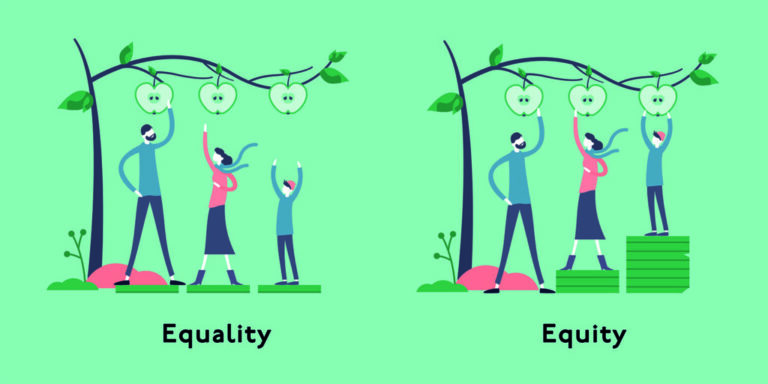
One of my wins today was the discussion about fairness. We discussed that fairness does not mean that every student should get the same grade despite their effort. It means that they are provided with the tools to be successful for every task. This is equity and it is aligned with the principles of UDL since it is the basis of inclusion.

Day 2 - Educational Belief

 Social Reconstructionism


All teachers and students hold a range of beliefs – whether they are beliefs about religion, education, health, politics or a multitude of other topics. When combined, teachers' and students' beliefs about teaching and learning are often referred to as educational beliefs.

When I took the educational belief test, I came out as a social reconstructionist. I will share the definition below:
 
"The philosophy of Social Reconstructionism is a student-centered philosophy. This philosophy is rooted in the belief that education should be focused on reconstructing society. This emphasis is a result of the perceived lack of leadership on the part of schools to create an equitable society."

I believe this definition makes sense to me because I tend to put light into social issues and share the idea that education can shape a better future for all of us. There's reason to believe that this characteristic could be culturally-oriented because of this teacher, who was more than motivated to make social change in my country, his name is Paulo Freire (1921-1997). Paulo Freire believed that education could overcome oppression and improve human conditions.

According to him, people should resist oppression and not become its victims, nor oppress others. In order to do so, he used dialogue and critical thinking by development awareness to overcome domination and oppression. In contrast to the pedagogy that was going on at the time, when students were expected to listen and reproduce and be prepared to work as soon as they left school, the technicist pedagogy.

Freire saw teaching and learning as a process of inquiry in which the child must invent and reinvent the world.

Now, that I am aware that my belief and values have a profile name of its own, I am encouraged to own it and continue exploring and be an agent of social change.

“One child, one teacher, one book, and one pen can change" - Malala Yousafzai.

segunda-feira, 11 de setembro de 2023

Daily Actions - Effective Teaching

Day 1

 “When we learn we change the way we think, feel, and act”


On day 1, we discussed that teachers are agents of change, and it means we have the power to influence students' academic, social, and emotional development, as well as their perspectives on various societal issues. 

After this course, I felt encouraged to be an agent of change and be the teacher I needed when I was growing up.

Day 2


As a substitute teacher, I visit all classrooms in primary school (KG-Y6). Having said that, I am delighted to see the wonderful work of my colleagues and different classroom management strategies.

In Y4, I saw a flower and as the students showed the CLAs the flower gets another petal. By the end of the week, if the flower is complete, they get the golden time. I saw a variation of the same strategy with the letters that complete the sentence TEAM WORK.


I will keep collecting ideas and posting here.

Day 3


"The whole art of teaching is only the art of awakening the natural curiosity of young minds for the purpose of satisfying it afterwards."
 – Anatole France

I am going to evaluate this teacher's performance, identify performance gaps in regards to effective teaching and suggest strategies to change this setting.


 Case 2

Mr. Noyes has taught social studies for 22 years at Eastville High School. Twenty-five Modern European History students come  through the door. They slide their desks into cluster formation so they can be close to their friends and as far from the teacher as the space permits. Less than a third of the students have their textbooks and or notebooks. Shuffling through some well-worn lecture notes, Mr. Noyes neither greets nor

acknowledges students as he gets ready for the class. The bell rings; students are still entering. He does not ask students why they are late or why they are unprepared for class nor is there any attempt to provide them with replacement materials. Mr. Noyes comments to the last student that enters “You are late.” The blackboard is clean.


Two minutes after the bell rings, Mr. Noyes says “Okay, today we are going to cover the four causes

of World War II. Take out your notebooks while I take attendance.” Five students respond by taking out their 3-ring binders with un-punched ditto handouts spilling out. Most students ignore the request and continue talking. “Okay, let’s simmer down while I take attendance.” He calls the roll and checks off his attendance log. Students “simmer down’ but do not take out notebooks, which are either crumpled in their locker or lost. He takes about five minutes to complete the attendance routine. “Ackerman, Baer...” Then he passes out some paper for those without notebooks. “Who needs paper today?”


Mr. Noyes goes to the blackboard “Okay, we can start now.” He writes “Four Causes,” followed by the

numbers 1 through 4. Jamie in the back of the room curses audibly. Mr. Noyes ignores him. Mary

yawns, and Brian puts his head down preparing for his daily nap. 


“I hope you had a chance to read the home-work assignment” Noyes says in a voice clearly implying his belief they will not have had a chance. Four kids say “What homework assignment?” and Mr. Noyes responds, “I put it on the board at the end of the class yesterday. You know, two pages about the causes of World War II. If you didn’t have a chance to do it, I will go over the material now. You had better listen up. There is a quiz tomorrow.” There is no attempt to check who did the reading. Mr. Noyes opens up with the same lecture he has used for years.


Fifteen minutes into the class, 80 percent of the students are disengaged or disruptive. Two students

are spending time copying their Spanish homework from a classmate in order to be prepared for the

next period. Three boys are out of their seats and playing ‘push lite.’ a game of friendly poking. Two girls are applying make-up and chatting quietly about a recent date with Chad. Two other students are quietly playing a math game, and one girl is quietly doing her French homework due the next period. The students have tested the limits and know exactly how much they can get away with. Mr. Noyes punctuates his presentation with refrains “Okay, knock if off,” “Enough of that.” “Come on, this will be on your quiz. You won’t learn it if you don’t pay attention. One more thing from you, Jack, and you will be going to the office.”


This process continues for the entire class. The bell rings, and students stream out the door as Mr. Noyes calls out: “be sure to read the next section in the text for tomorrow, and don’t forget the test.” Students head out for lunch without being dismissed. There is no summary or wrap-up.  When he is asked  about the class in the post-observation conference, Mr. Noyes says: “These kids are in the average age group because they don’t care much; they never do their work. I can’t really teach them if there is no effort. They have no interest in the material.” A check of his grade book shows very few entries, but all term grades are A’s and B’s
-----------------------------------------

Performance gaps in regards to effective teaching

1. Setting expectations;
2. No bonding or connection with students;
3. He's not prepared in advance or engaged with students' success;
4. His teaching style doesn't cater to students' needs and 21st century demands (fixed mindset, growth mindset);
5. He gives no feedback to the students that were actually prepared;
6. He doesn't think he's responsible for students' learning;
7. His assessment system does not reflect his real class and students' learning;

Key performance indicators (KPIs)

What change do I wanna see? How am I going to measure it?

1. Classroom management: The teacher should set higher expectations on behavior and commitment. The teacher could create an essential agreement with his sts; 1.1. How can we measure it? Students are following classroom routines and being responsible for their own learning and material; 2. Teaching Style: Motivate the teacher to innovate and give him tools to do so, like cpd training and technology, encourage peer observation; 2.1. Students are engaged in using other tools rather than just notebooks and worksheets; 3. Evidence of learning: Suggest that the teacher creates a more detailed and reliable criteria for his assessments; 3.1. We can examine evidence of learning such as papers, posters, projects and notes on sts' notebooks;

Hopefully, by the end of the 1st term, I will notice some of the changes working for the progress and ignite in him the desire and ability to make change.

Is there learning going on? Growth mindset is a key element of being a teacher and catering to the students' needs and commitment to their success.

Change management
6 conditions of Systems Change
Policies, Practices, resources Flows (Structural Change - Explicit)
Relationships & Connections, Power Dynamics (semi-explicit)
Metal Models (transformative change - implicit)


Day 4

Unit and Lesson Plan Analysis

In this post, I am comparing the cover lesson plan with the UDL lesson plan template.
 

The unit plan template does contemplate the UDL principles by including sections for potential barriers for learning and UDL strategies for multiple means of engagement, representation, and expression.

In contrast to the cover plan, this is what I notice:

The substitute teacher's cover plan only provides a general outline of the day's activities, lacking specific information such as the lesson goal, enduring understandings, and essential questions. It also doesn't include details about accommodations and modifications for students. Learning targets, standards, and clear expectations for both the teacher and students are also missing from the cover plan.

In conclusion, the cover plan will often be more task-based, which can be a challenge I may face going forward in trying to implement effective teaching strategies in my classroom. My strategies to tackle this issue will be observing and assisting all classes so I can create a bond with the students, then I should be able to roughly trace the class profile and identify the students who might need accommodation when I cover those classes.


Day 5


Authentic learning products are something that has value beyond the classroom and it contributes to the community. 

Three parts to a learning Goal

Content standards, Performance standards, Learning competency

FLEX vs Constricted verbs

Flex verbs are focused on learning purpose;

Constricted verb = scaffolding

I learned how the use of flex or constricted verbs can affect the elaboration of learning goals. To elaborate SMART goals, I will need to use more flex 

Day 6


Today, we did a self-assessment regarding our current practice.We should consider important targets in our journey to become more effective, peaceful teachers. We were encouraged to set future professional goals to work on.
It was very useful because I could have specific goals to work on and reflect on the strategies I was not using or not even aware of.
For instance, I realized I need to plan my assessment tasks before beginning to teach a unit, design tools to collect evidence of student thinking, work processes and attitudes/dispositions; Besides that, I need to learn to assess when it is best to design a holistic or an analytic rubric.

It was a very useful lesson as it provided me with a meaningful and specific opportunity to identify the areas I should further refine.

domingo, 10 de setembro de 2023

Day 1 - Definition of Learning

 What is learning?


In this post, I will share the definition of learning that we came up as a group during the course.

"Learning is a continuous process which can be acquired through interaction and response which can be used to solve real-life problems."


The professor shared the following definition that I considered similar to ours, then I decided to share it here as a reference to come back and read it again to help me stay on track of what matter: The students's learning.


“a process that leads to change, which occurs as a result of experience and increases the potential for improved performance and future learning” Ambrose et al, 2010, p. 3


“When we learn we change the way we think, feel, and act”


Daily Actions - Effective Teaching

Day 1   “When we learn we change the way we think, feel, and act” On day 1, we discussed that teachers are agents of change, and it means we...